
The Script Builder · Brief → Furnace → Ignite
Turn raw notes into
a script you can shoot.
Forge takes one honest promise and your rough notes, then shapes them into a beat sheet with timing, camera direction, spoken lines, and the job each beat has to do. No essay to adapt. No blank-page guessing.
01 · The Problem
The hard part isn't the idea. It's making it filmable.
You can know the topic, have the notes, and still lose the video at the blank page. A good script is not just better wording. It is a sequence of decisions: what opens the loop, what the camera shows, where attention needs a reset, and how the payoff lands.
Forge is built for that translation — from raw thinking to a plan you can actually record.
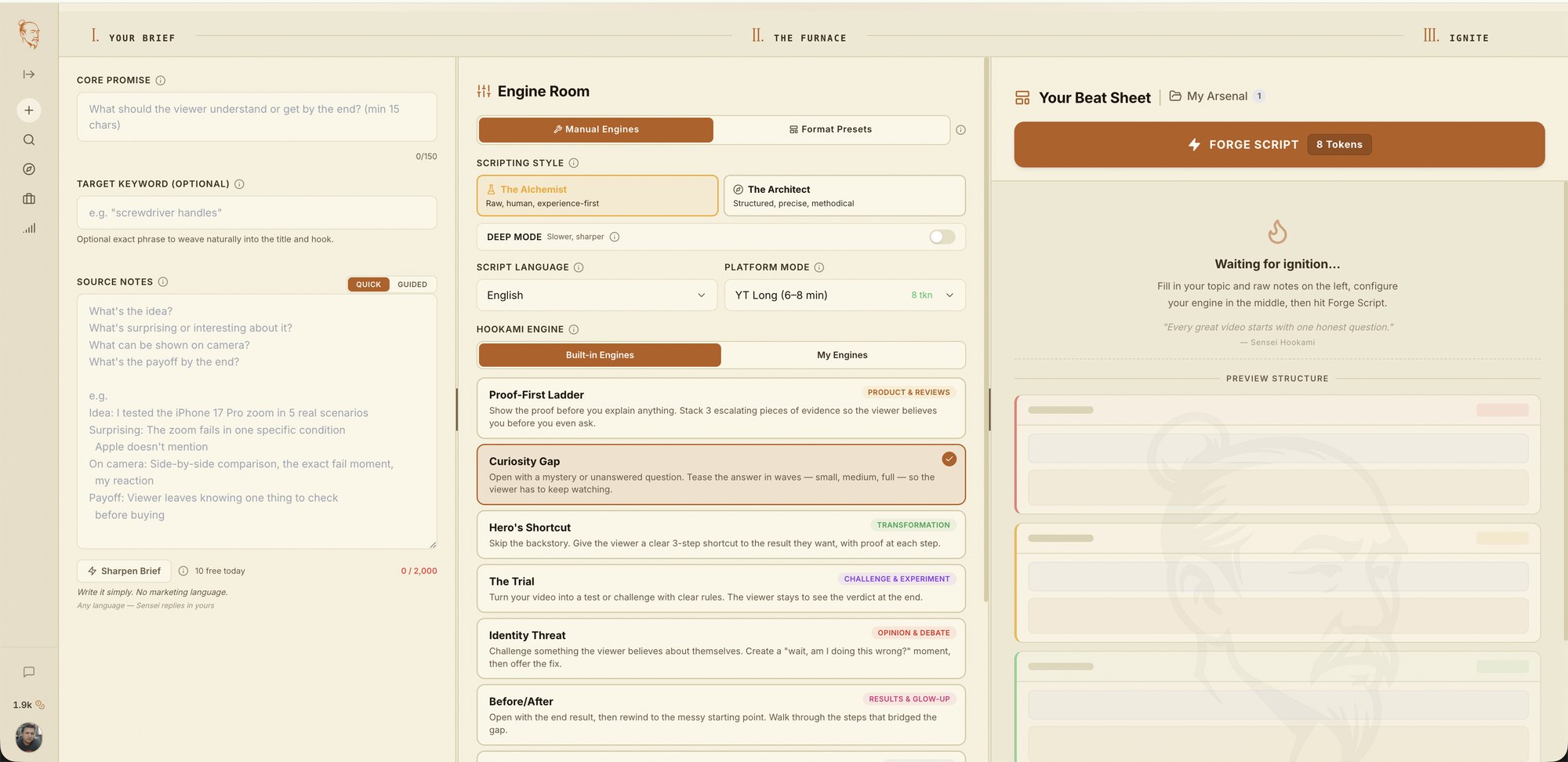
Every great video starts with one honest question.
02 · Your Brief
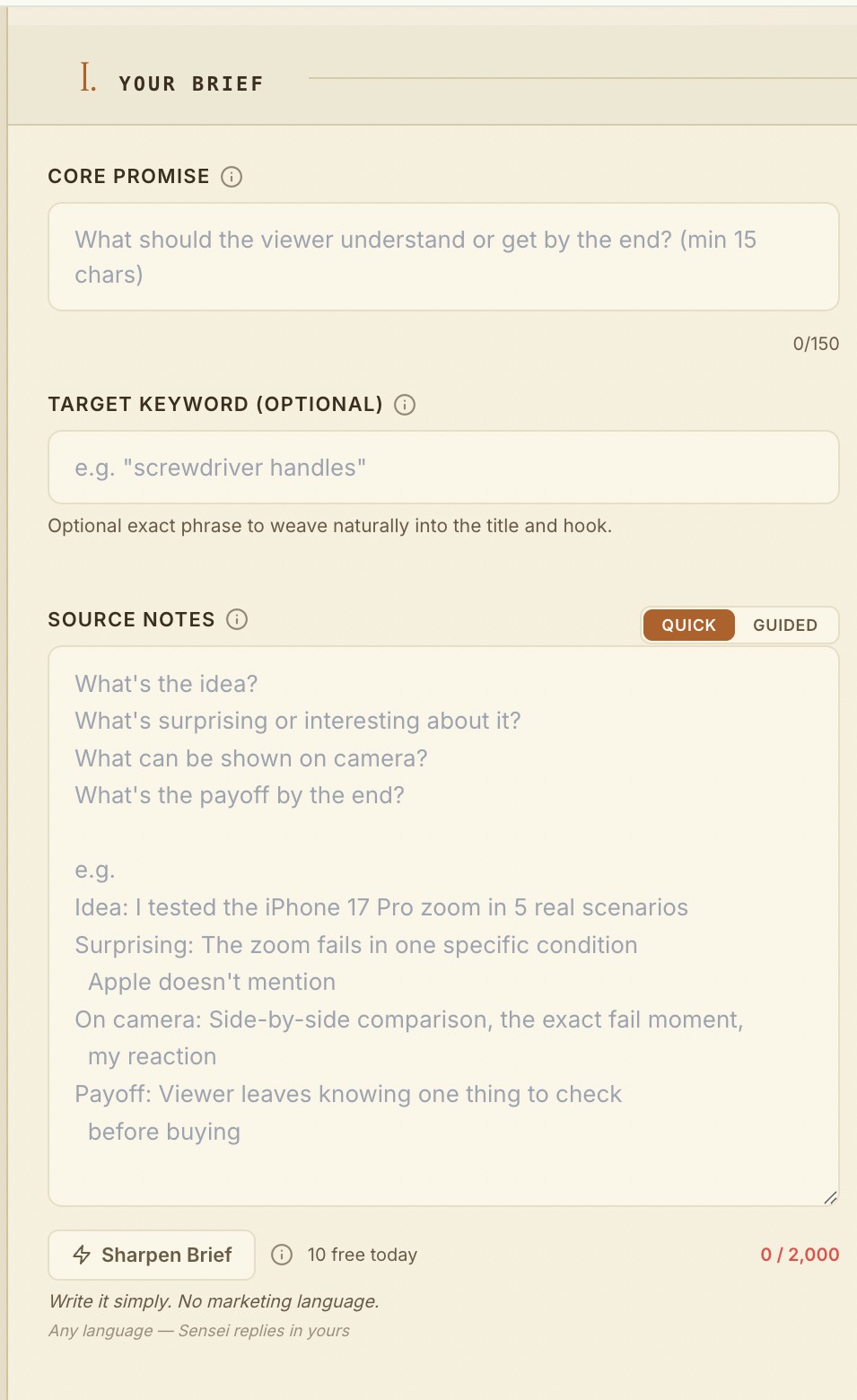
It starts with one honest promise.
Start with the core promise — what the viewer should understand, feel, or be able to do by the end. Then add the raw material: the idea, the surprise, what can be shown on camera, and the payoff they should leave with.
Keep it plain. No marketing voice. No polished pitch. Forge works best when the brief is honest and specific. Add an optional target keyword when search context matters, and write in any language — Sensei replies in yours.
The clearer the raw material, the sharper the script.
03 · The Furnace
Choose the shape of the story.
This is where you direct how the script is built. Take the structure into your own hands, or hand Forge a complete, ready-made format. Same brief, different shape.
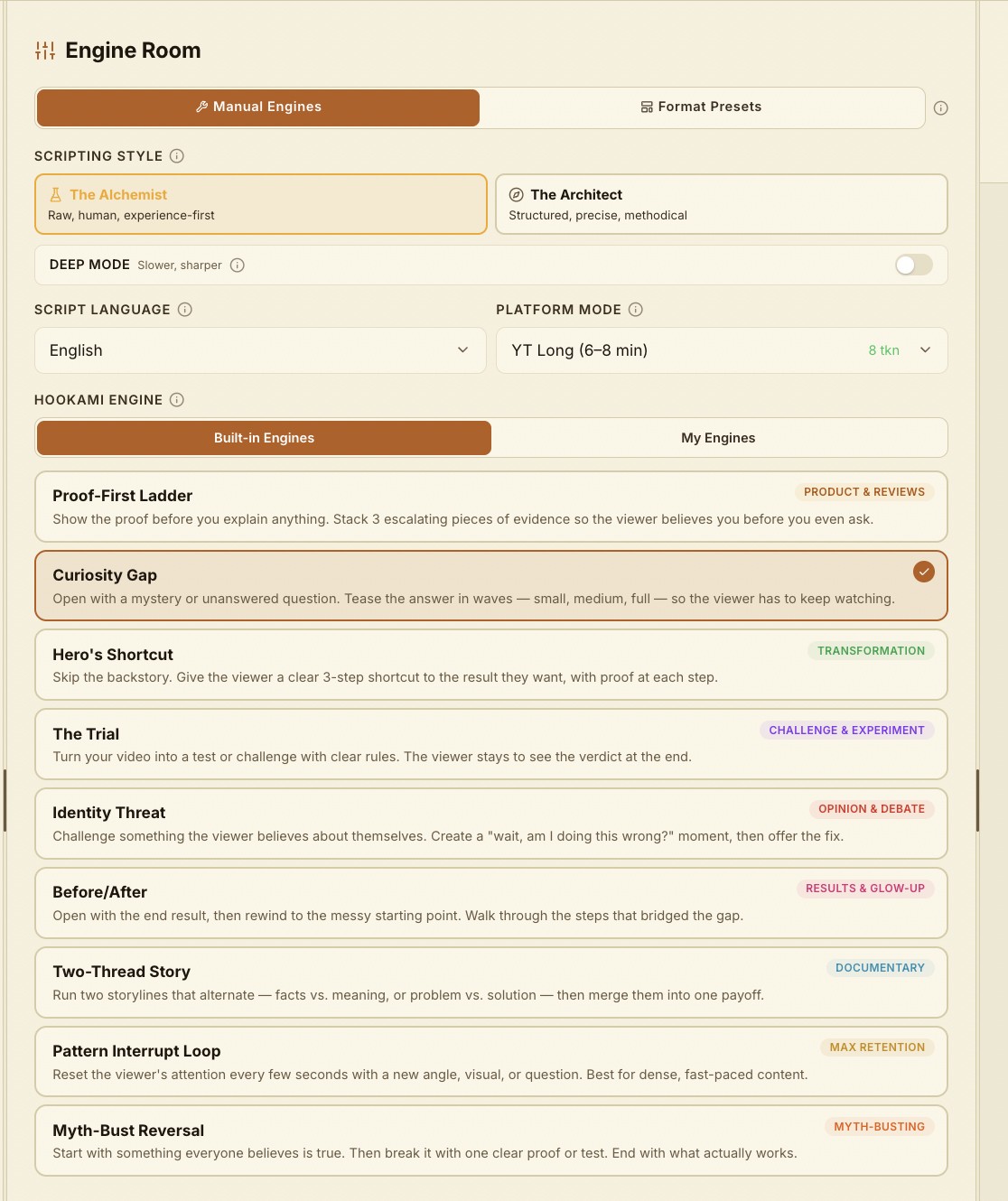
Manual Engines — you choose the structure.
Proof-first stacks evidence before explaining. Curiosity gap opens a loop and pays it off in waves. Before/after starts with the result, then rewinds to the messy starting point. Each engine gives the same idea a different path through the viewer's attention.
One idea, many ways through. You pick the path.
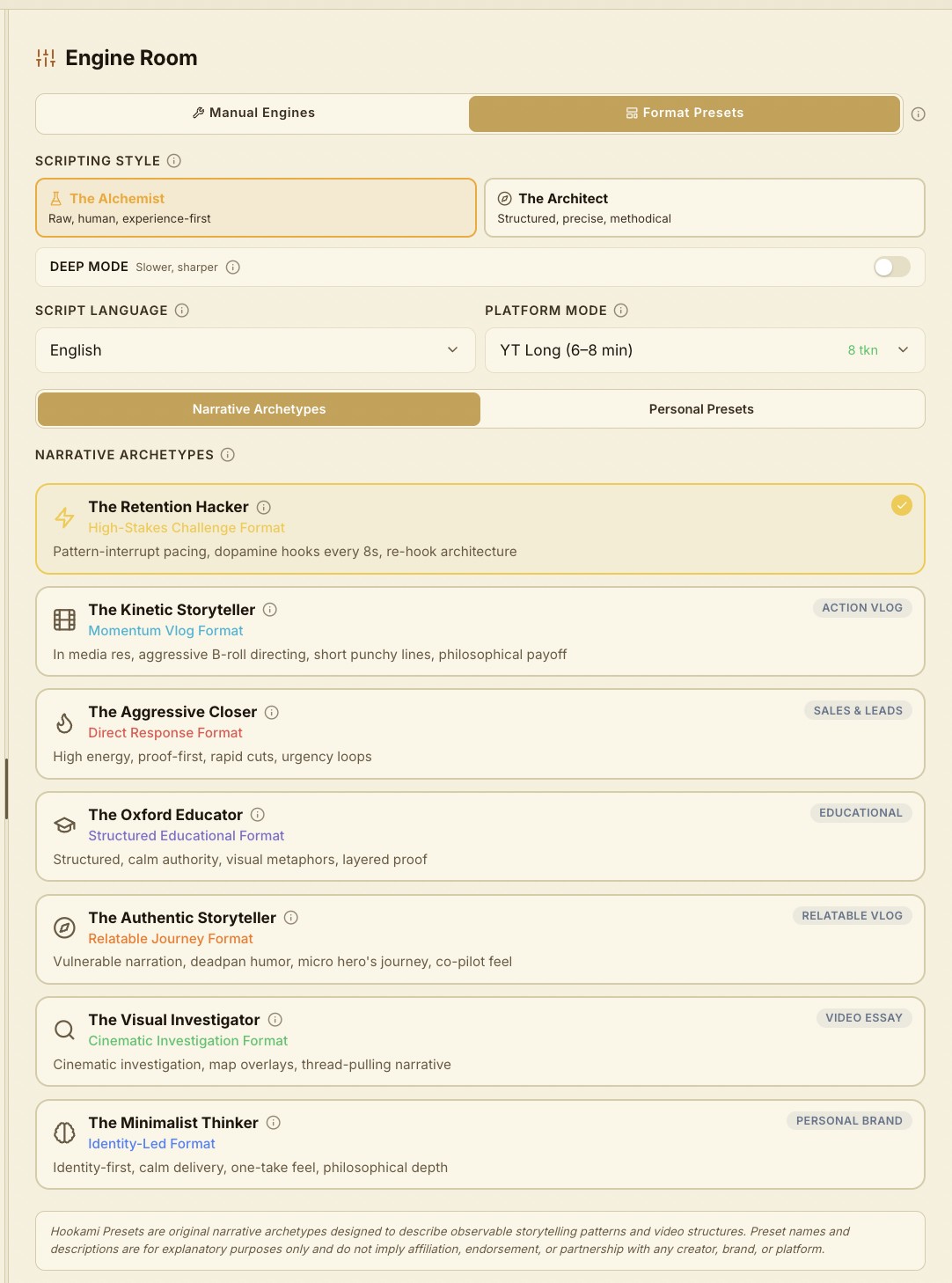
Format Presets — a structure, ready-made.
When you want the whole format handled, reach for a preset. Each archetype combines pacing, energy, framing, and payoff logic — from high-stakes challenge formats to calm educational formats and cinematic investigation formats.
These are original storytelling patterns, not creator clones — built to describe a way of telling a story, never to copy a specific person.
Scripting Style — same brief, different voice
The Alchemist
Warmer, rawer, more experience-first. Writes the way a creator actually talks — feeling before formula.
The Architect
Cleaner, more structured, more precise. Builds the script like a plan — every line load-bearing.
The structure should work on the viewer, never announce itself to them.
04 · Ignite
A beat sheet, not an essay.
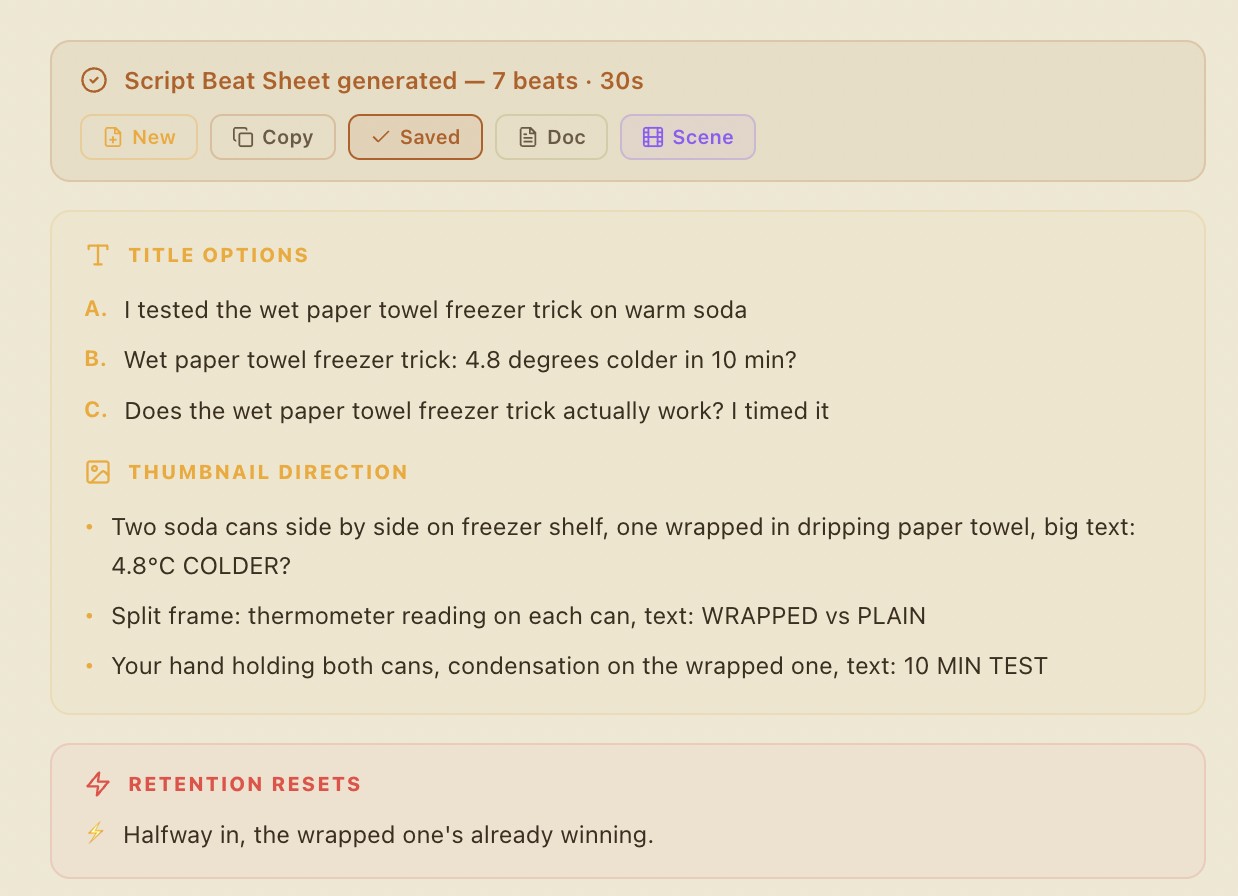
Hit Forge and the idea becomes a shootable plan. You get title directions, thumbnail angles, and a full beat sheet — each beat with its timestamp, what the camera sees, what to say out loud, and why that moment exists.
Attention reset cues land where the viewer is most likely to drift. Private notes stay behind the camera, so you know what each beat is doing without over-explaining it on screen.
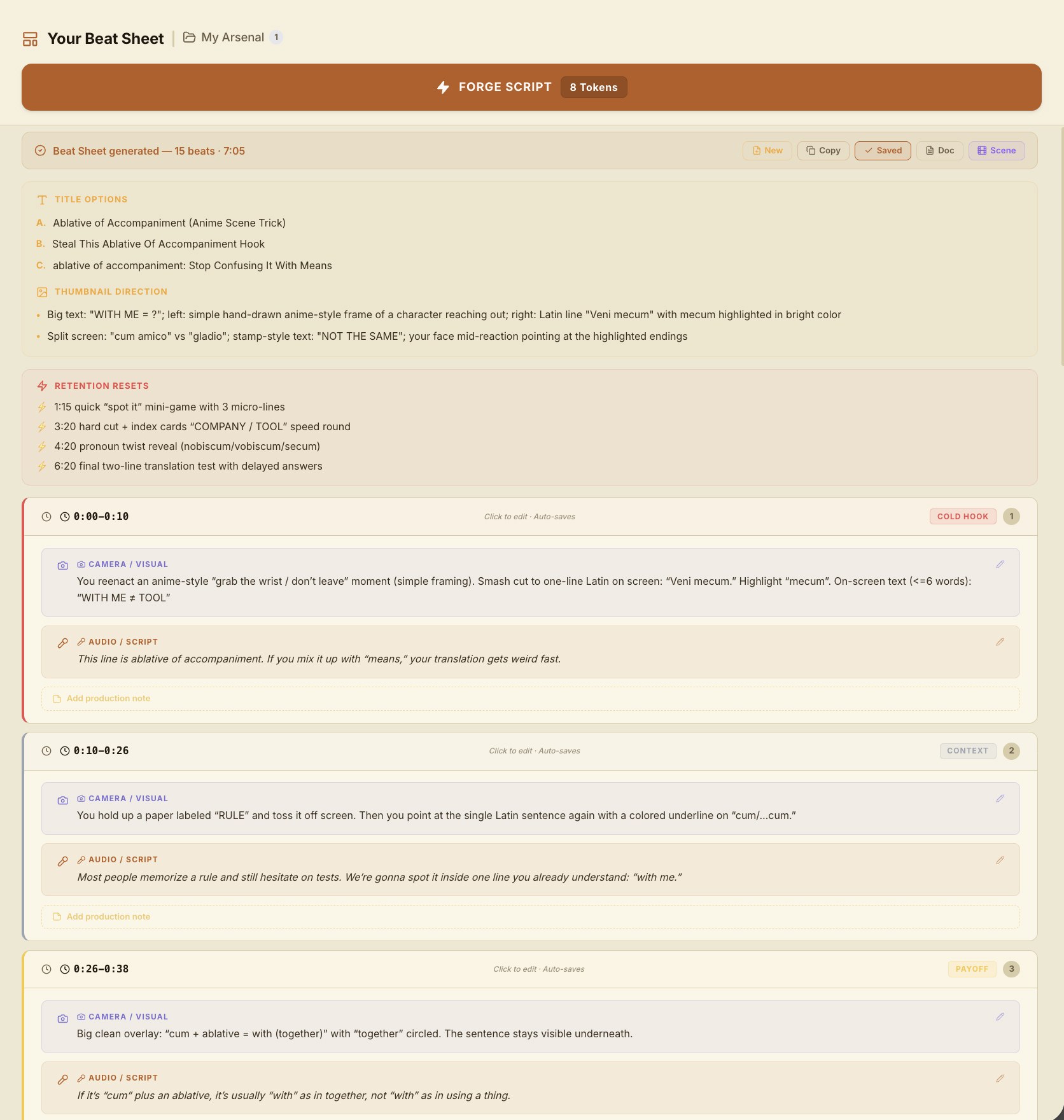
Built to film, not to rewrite.
05 · Grounded by Design
Designed to stay inside your notes.
Forge works from the raw material you provide and avoids making unsupported claims sound certain. When the brief is thin, the right behavior is to surface the gap — not decorate it with fake confidence.
The writing stays in natural spoken language: clear enough to say on camera, structured enough to hold attention, and free of strategist jargon the viewer was never meant to hear.
Forge gives you the structure. You keep editorial control.
06 · Your Arsenal
Save the formats that keep working.
Strong outputs land in your Arsenal — a private library of beat sheets you can view, regenerate, or extend with another scene. When a format earns its place, it stays one click away for the next video.
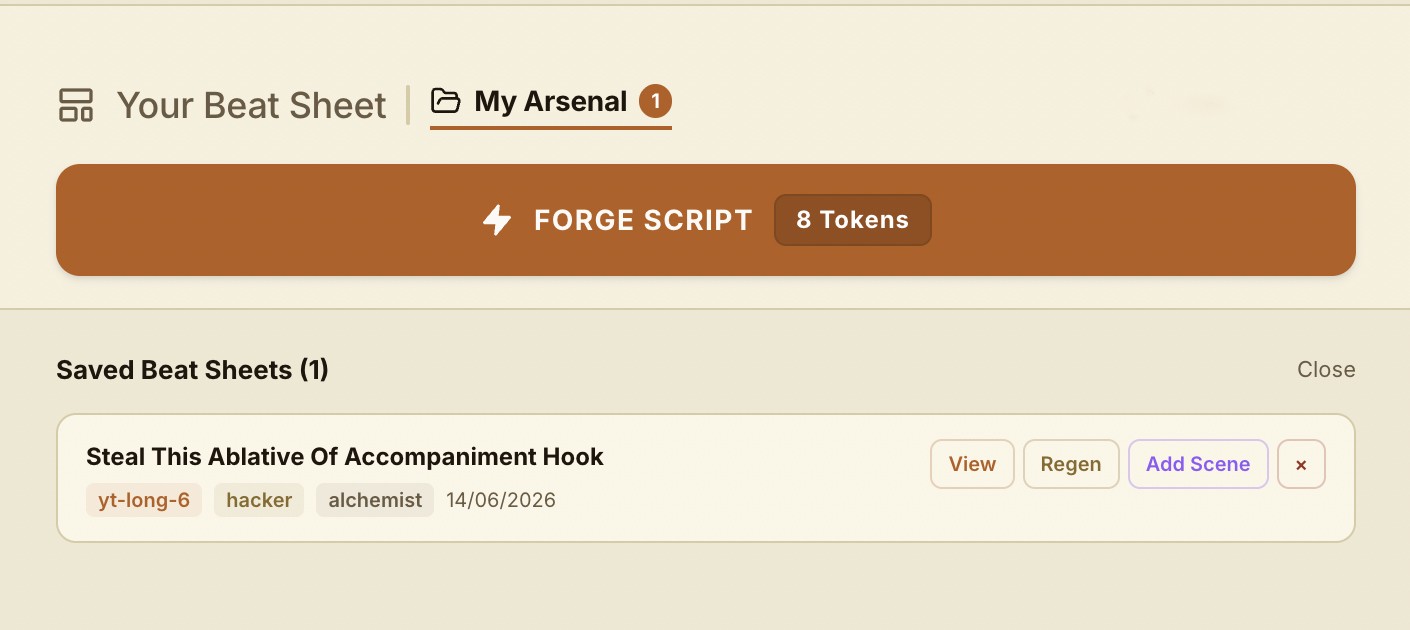
A script you can shoot. Not an essay to adapt.
In your workflow
A brief in. A plan you can film out.
Use Forge when you are ready to develop a topic into a structured script. Bring a clear promise, your source notes and the real details you want to show.
- 01
Shape the brief
Add your idea and evidence, or prepare the direction in Sensei with Brief Builder. Choose the platform, language and style that fit your project.
- 02
Build the script
Develop a beat-by-beat plan with spoken lines, camera cues and pacing. Review the title options, thumbnail directions and optional scene guidance.
- 03
Make it ready to shoot
Edit the output around your own voice and production constraints. Generate visual options in Frame Studio and review the recorded cut in Pre-Publish.
Forge is where ideas become plans.
A signal from Trend Vision becomes an angle. A breakout in Outlier reveals a pattern. A teardown in Blueprint exposes the structure behind a winning piece. Forge turns that material into a script you can shoot — then Pre-Publish checks the final cut before it goes live. One thread, from discovery to production.